Bleeding is more pronounced, downtime is longer, and the procedure is unambiguously medical. Depth at this level is also adjusted across the face, because the skin over the forehead and nose is thinner than over the cheeks.
Deeper is not better in general. Deeper is more injury, more downtime, more risk, and more benefit only when the target sits at that depth.
A practitioner who uses one depth across the whole face at every session is not adjusting for anatomy. Anatomy is what they are paid to adjust for.
Passes, density and pattern
The second control is how many times the device crosses each area and in what pattern. Pens are typically moved in overlapping strokes in several directions until a uniform endpoint is reached.
That endpoint is usually even pinpoint bleeding or uniform erythema, depending on depth. More passes produce more channels per square centimetre and a stronger response.
Past a certain point, additional passes add trauma without adding benefit. The endpoint is read by eye, which is another reason the operator matters more than the machine.
The devices
Rollers are drums studded with fixed needles, rolled across the skin. They are simple and inexpensive, and their needles enter the skin at an angle and exit at another, tearing rather than puncturing.
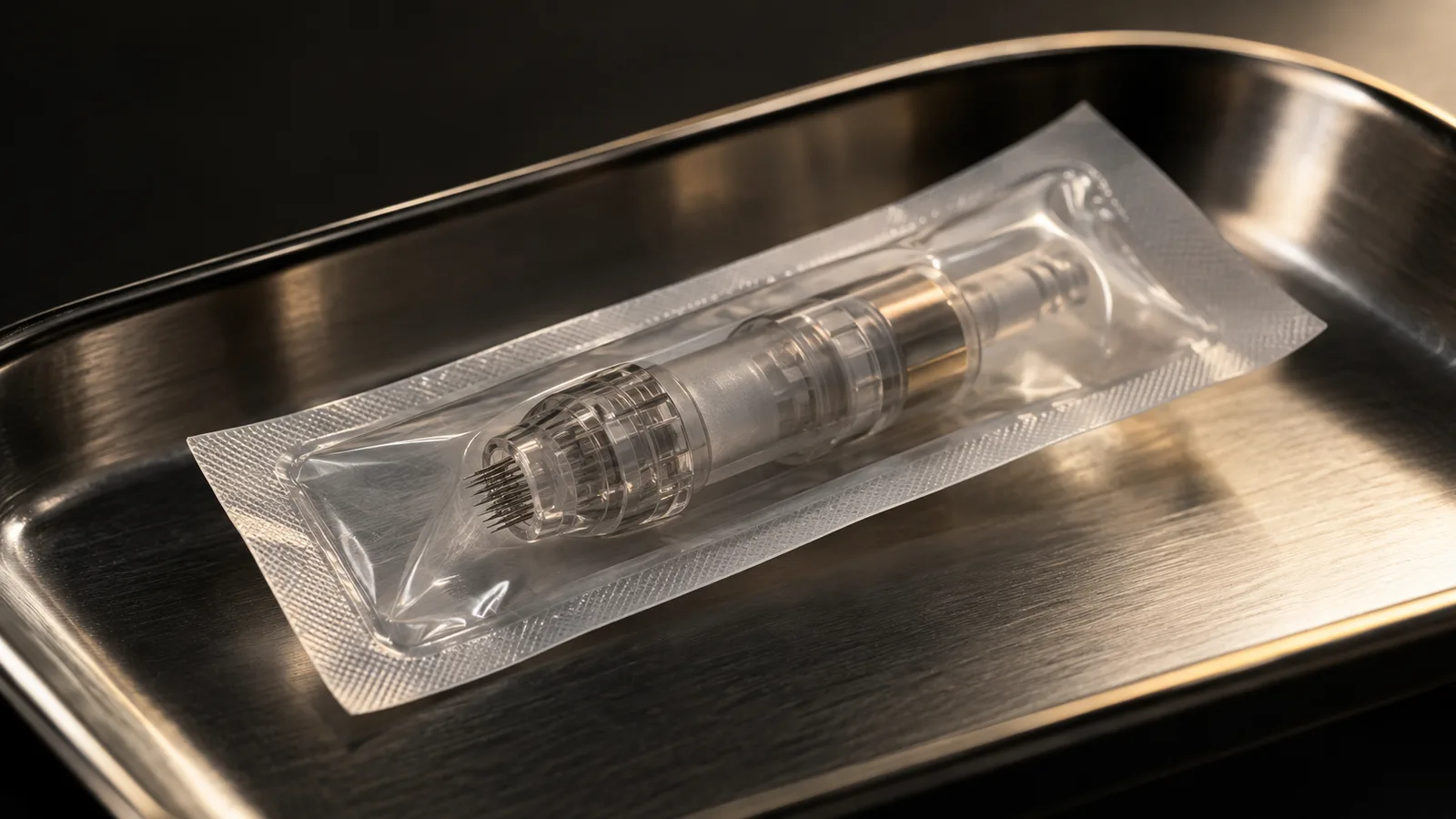
Professional use has largely moved away from them. Pens are motorised handpieces with a disposable cartridge of needles that oscillate vertically at high speed, entering and leaving the skin perpendicularly.
Depth is adjustable, the puncture is clean, and the cartridge is single-use. This is the standard professional device.
Radiofrequency microneedling pens add insulated needles that deliver heat into the dermis at the tip. The heat produces a second mechanism, thermal tightening, and a different profile of benefits, risks and cost.
It is a separate procedure and should be discussed as one. A quote that blurs the two is a quote to question.
The first microneedling device to receive marketing clearance from the United States regulator was cleared in 2018, for the treatment of facial acne scars in adults aged twenty-two and over. Clearance is a device-safety determination for a stated use.
It is not a statement that the device does everything a clinic says it does. Ask for the device name and look it up on the regulator's database, and if the pen cannot be found, ask why.
What the evidence supports
Atrophic acne scarring has the best evidence. Multiple randomised and split-face trials, and pooled analyses of them, report measurable improvement in scar scores after a series of sessions.
The gains continue to develop for months afterwards as remodelling proceeds. This is the indication the procedure is cleared for and the one it does best.
Fine lines and photoageing have moderate evidence. Trials report improvement in skin texture, fine wrinkling and measured dermal thickness after a series, with effects smaller than those of ablative resurfacing and with far less downtime.
That is the trade the procedure offers. Enlarged-looking pores and general texture have modest evidence, largely from the same photoageing trials, and pore size itself does not change.
Melasma has mixed evidence. Needling alone is not a reliable melasma treatment and can provoke it.
Needling used to deliver a topical lightening agent shows more promise in some trials. The result depends on the agent and the protocol, and the risk of worsening is real.
Stretch marks and some surgical scars have limited but positive evidence, with results that vary widely. Skin laxity and lifting have weak evidence for standard needling: some firming from added collagen is measurable, and a lift is not.
Hair growth on the scalp has some evidence when needling is combined with topical minoxidil. It is outside this publication's scope.
The add-ons
Serums applied during or after needling reach deeper than they would on intact skin. That is either the point or the problem, depending on what is in the bottle.
Hyaluronic acid is bland and commonly used. Platelet-rich plasma is the most heavily marketed addition and has its own evidence guide and its own cost-benefit guide.
Anything else should be treated with suspicion: vitamin cocktails, growth-factor products of non-human origin, and cosmetic serums not formulated for open skin. A product that is fine on the surface is not automatically fine in the dermis.
Granulomatous reactions to inappropriate topicals applied over fresh needling are documented. They are difficult to treat.
Who may hold the pen
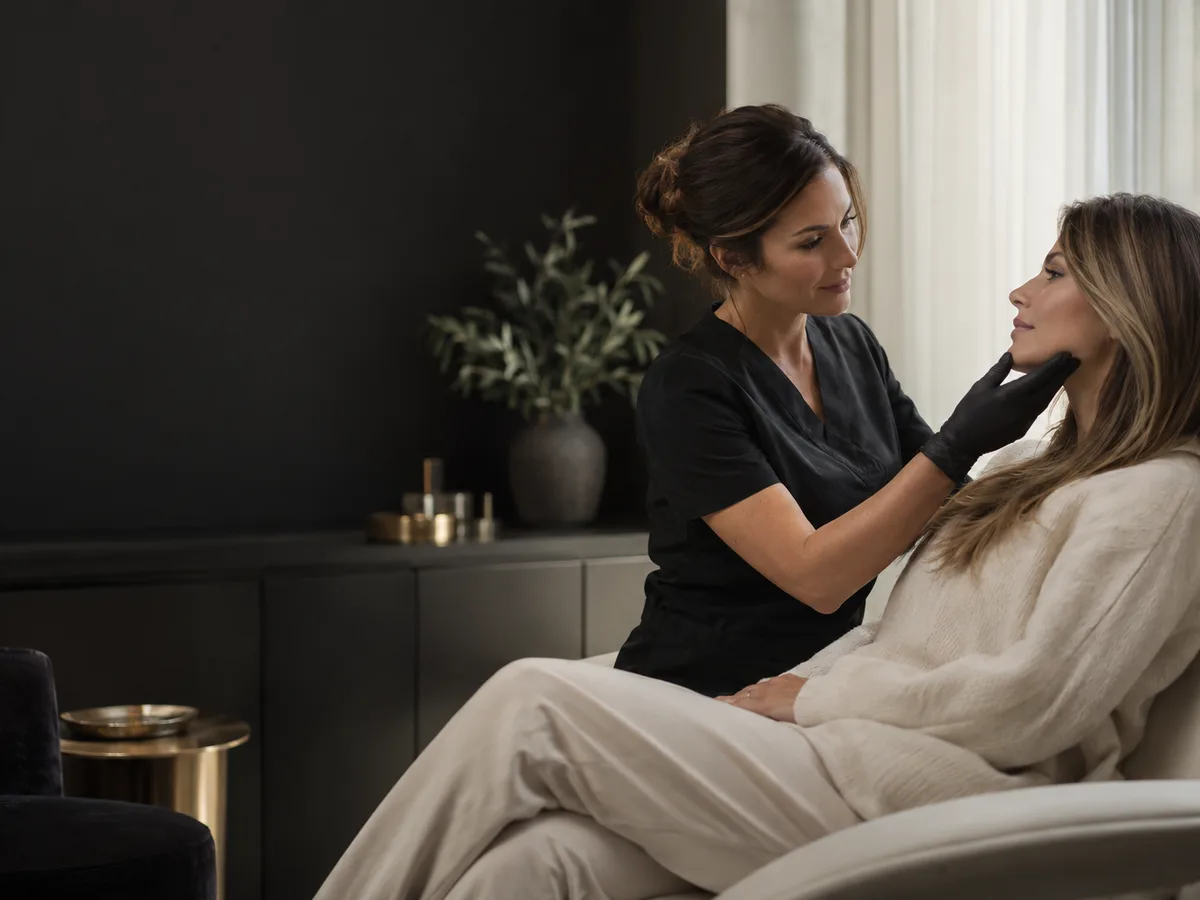
Any needling that penetrates the skin is, in the view of the Medical Board of California, the practice of medicine. Physicians perform it, and so do registered nurses, nurse practitioners and physician assistants under physician supervision.
Estheticians may not use devices that penetrate the skin. The provider guide covers how to read a clinic's staffing against those rules.
Timing in this city
Two Los Angeles specifics. Performers and anyone who works on camera should plan needling for a stretch without calls, since redness at modest depth lasts a day or two and at scar depth longer.
SAG-AFTRA's production calendars are more use for that planning than any clinic's estimate. Book the session at the start of a gap, not the end.
Everyone should stay out of the ocean until the skin has closed. Fresh channels close within hours, but the barrier stays compromised for days.
The bay water grades published by Heal the Bay are a useful reminder that Santa Monica surf is not a sterile rinse. Pools and hot tubs are no better.
Families timing a series around school holidays have a calendar problem as much as a skin problem, since the red days should fall when nobody needs collecting at three. Four to six sessions, four to six weeks apart, spans a term.
The district calendar at Los Angeles Unified School District is the place to check the dates. Map the series onto it before the first appointment rather than after.
The afternoon of a session wants shade and low glare rather than a sofa. Interiors and tree cover both work; the coast does not.
The shaded grounds of the Homestead Museum in the City of Industry are a low-glare way to spend the red afternoon. Go late, when the light is off the courtyards.
In brief
Microneedling is a controlled dermal injury that leaves the epidermis largely intact. The healing response builds collagen where it is wanted, with less surface risk than treatments that remove the surface.
Depth and pass count are the controls, and the operator's judgement is the value. The evidence is strongest for acne scarring, moderate for fine lines and texture, and weak for anything described as a lift.
When you compare clinics, the claim worth verifying is the modest one: that the practice lists skin rejuvenation among its services and can name its device. Both facts sit on a published service list or they do not.
Whether the device is named, and whether the person naming it will be the person holding it, is the question to carry into the room. Judge the answer by how specific it is.