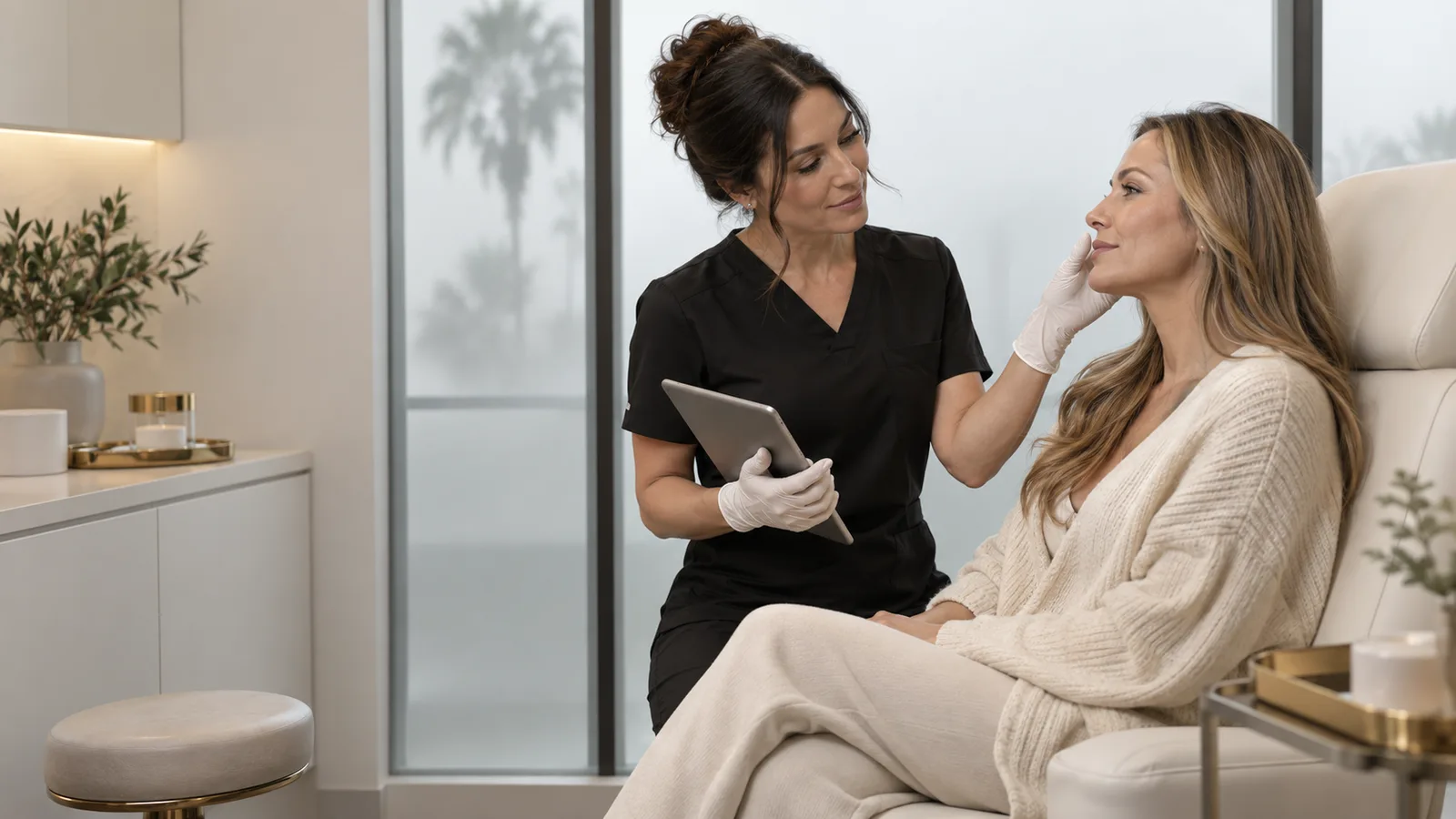
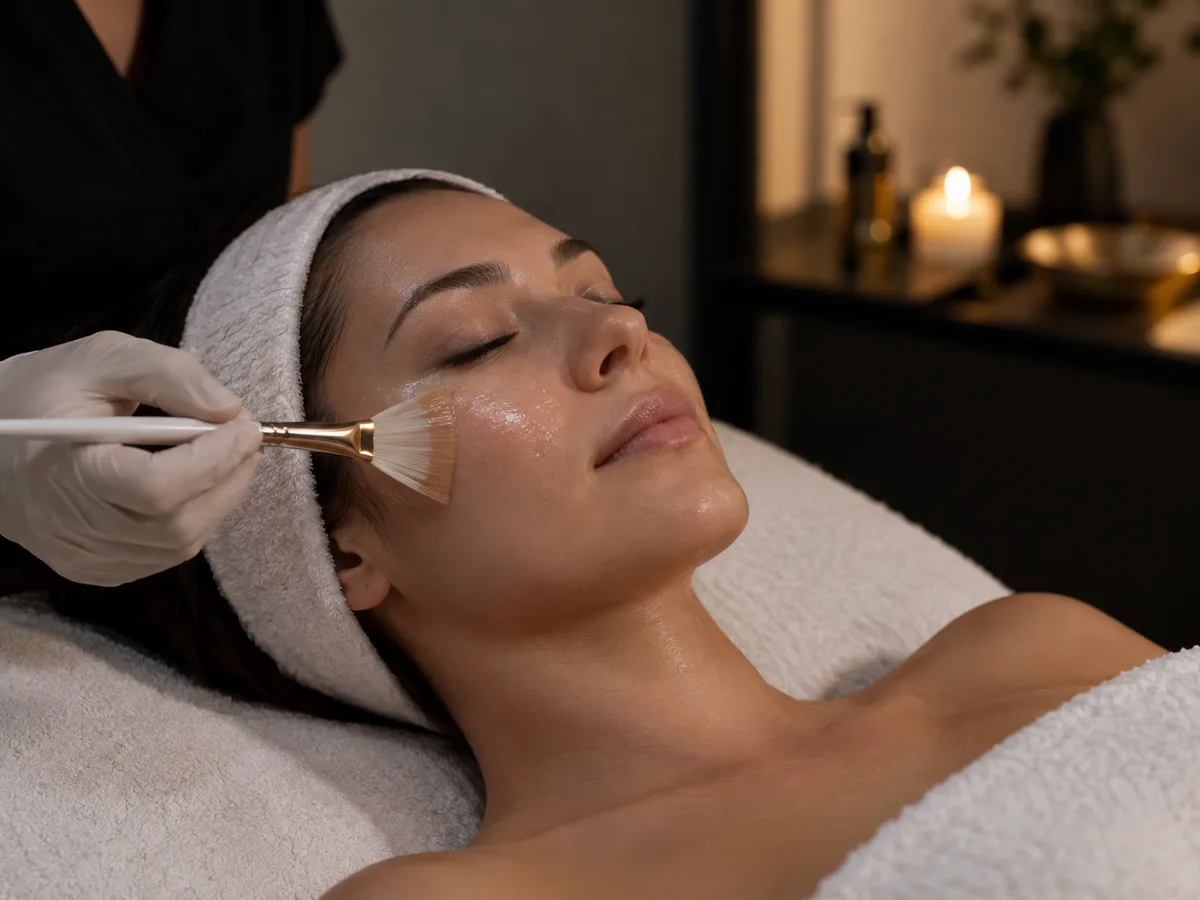
Whether the acid is called medical-grade is irrelevant. Whether the business is called a medical spa is irrelevant. What matters is depth, and who is holding the applicator when the depth is reached.
What supervision means
Registered nurses perform a great many medical peels in this city, and it is worth being clear about the arrangement that makes this lawful. A nurse acts under standardised procedures: written protocols developed and approved by a supervising physician.
The physician must have established a relationship with the patient. In practice this means a physician assessment, in person or in a manner the rules permit, before the first medical procedure.
The physician need not be in the room. The physician must be real, named, responsible and reachable.
Physician assistants and nurse practitioners work under their own supervision or practice agreements with somewhat different rules. The same principle holds: a named physician who has taken responsibility for the care.
A "medical director" whose name appears on a website but who has never assessed you, whose protocols nobody can produce and who is not reachable on the day is not supervision. It is a signature.
Three questions test the arrangement. Who is the supervising physician? Have they assessed me, or will they before the first medical peel?
The third is how you would reach them if the peel went wrong on a Saturday. A practice operating properly answers all three without pause.
Who owns the business
California also restricts who may own a medical practice, under the corporate practice of medicine doctrine. A medical spa offering medical peels must be structured so that a physician owns the medical practice.
Non-physicians may own the non-medical parts of the business under a management arrangement. The structures are complex and enforcement is uneven.
The point for a reader is that a medical spa owned outright by a non-physician, with a physician hired as a director, is on uncertain ground. Businesses on uncertain ground do not always prioritise the rules that protect you.
You are not obliged to audit a clinic's corporate structure. You are entitled to ask who the physician is and what their relationship to the business is, and to notice whether the answer comes easily.
Checking a licence
Every licence type above is searchable online in under a minute. Physicians are on the Medical Board of California's licence look-up, which returns licence status, expiry, the medical school, and any public disciplinary action or accusation.
Registered nurses and nurse practitioners are on the Board of Registered Nursing's verification page. Physician assistants are on the Physician Assistant Board's, and estheticians are on the Board of Barbering and Cosmetology's licence search.
Search the person who will perform the peel, not the person on the door. If the practice will not tell you in advance who that is, book elsewhere.
If the person is an esthetician and the peel is described as medical, one of the two descriptions is wrong. Find out which before the acid is mixed.
Questions that sort the phrase from the fact
Which acid, at what concentration, and how many layers? A specific answer establishes the intended depth.
Will this peel reach the dermis? If yes, who is performing it and under what licence, and if no, why is it described as medical-grade?
Who is the supervising physician, and have they or will they assess my skin? What is the plan if I develop pigment change, prolonged redness or a cold-sore outbreak afterwards, and whom do I call?
How many peels of this depth has this practitioner performed in the last year, on skin like mine? None of these questions is rude, and a practice that treats them as rude has answered them.
Write the answers down in the room, because the details blur by the time you reach the car. Compare them against the menu when you get home.
Where the two disagree, the menu was written for search engines and the answers were given to you. Believe the answers.
Why this matters more for peels than for most treatments
A peel's depth is set in real time by the person applying it, judged by eye from the frost and the skin's response. There is no dial that limits it.
An operator without the training to read frosting can take a peel deeper than intended in a matter of seconds. So can one under pressure to deliver a "medical" result from a cosmetic licence.
The consequences, scarring, pigment change and prolonged redness, are the kind that last. The licence is not paperwork; it is a proxy for whether the person holding the gauze has been trained to stop.
Around the city
Los Angeles has an unusual concentration of medical spas, and the phrase this guide is about is on most of their menus. Readers on the Westside who ask where to spend the peeling week ask us to be specific.
Families in Santa Monica and Malibu can check the district calendar at Santa Monica-Malibu Unified School District to time a medium peel for a school break. The visible days are the third through the seventh.
Swimming is off for the duration, and the reason is the barrier rather than the salt. Peeling skin is an open surface for a week.
The water-quality reporting from LA Waterkeeper is a reminder that the bay is not a rinse for an open face. Pools are no better while the skin is peeling.
Indoors and dim is the right setting for the week. Galleries, matinees and lobbies beat any patio, and the evening beats the afternoon.
The county's arts programme listings at LA County Department of Arts and Culture are a reasonable way to find a gallery or a matinee for a face that should not see noon. Book the late showing.
In brief
"Medical-grade" is marketing. Depth is the fact.
In California, a peel that stays in the epidermis may be performed by a licensed esthetician. A peel that reaches the dermis is medicine, performed by a physician or by a nurse, nurse practitioner or physician assistant under real supervision.
Check the licence of the person who will hold the applicator. Ask who the physician is, and ask how deep the peel goes.
If the answers and the menu disagree, believe the answers. Take your face somewhere the two match.