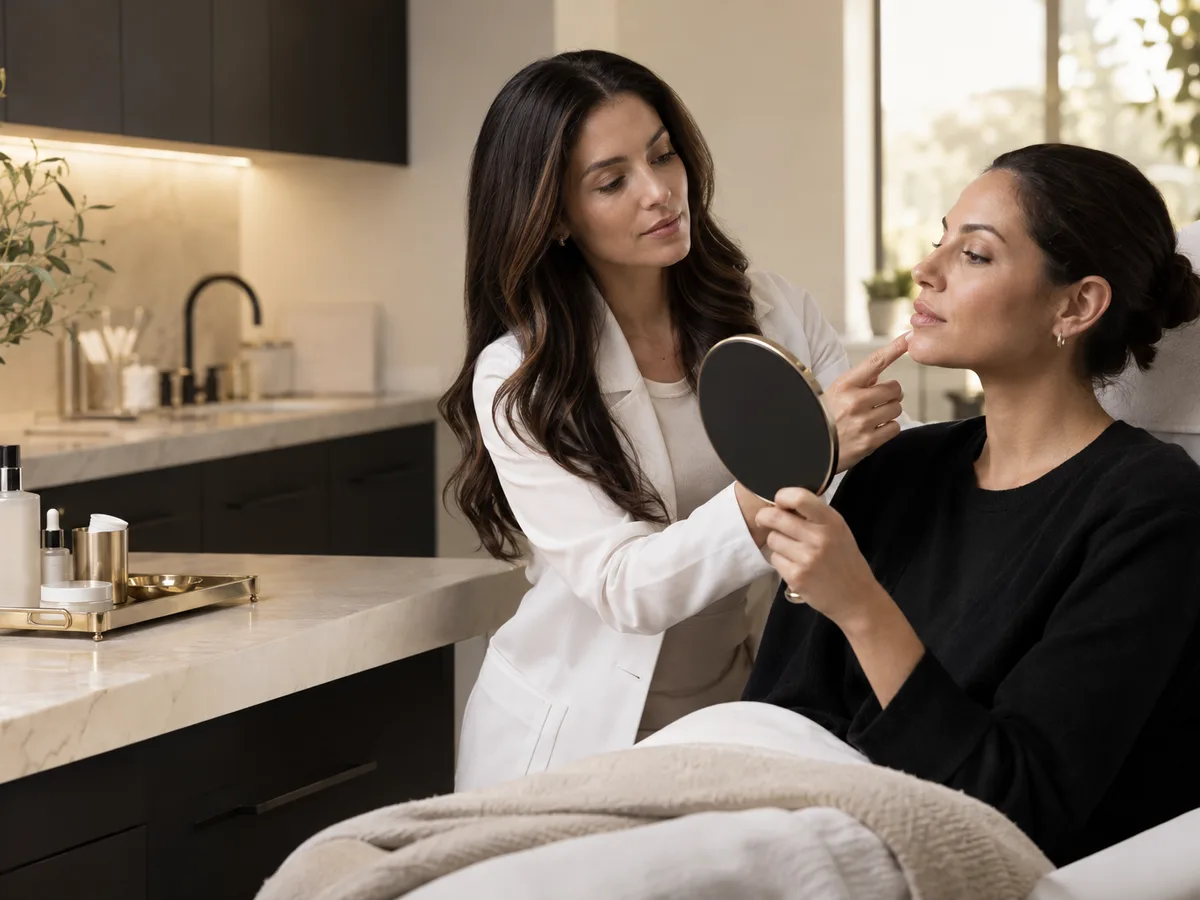
Each is a line item, and each is worth asking about individually. A "signature" package is a way of bundling add-ons whose value you might question if they were priced alone.
The address. Rent in Beverly Hills, Brentwood and West Hollywood is passed through, and so is the cost of a physician's presence, a nurse's time, sterile consumables and a proper clinical room.
A high price in a smart postcode may reflect all of those, or only the postcode. Ask which.
What a series costs in time
Money is one currency. The other is the calendar.
A series of four sessions at five-week intervals is five months from first appointment to last, with a red day or two after each. The meaningful result arrives some months after the final session.
A quote that looks reasonable per session can add up to most of a year of appointments, aftercare and sun discipline. Ask how many sessions the practice expects for your indication and how they will decide when to stop.
An open-ended maintenance schedule is a subscription by another name. The answer tells you whether the practice has an endpoint in mind or a revenue line.
The practitioner's time is priced differently across the city, too. A physician who performs the needling personally is selling an hour of a physician; a practice where the physician assesses and a nurse treats is selling a different hour.
Both can be good purchases. They are not the same purchase, and the quote should say which you are getting.
The consultation fee
Some practices charge for the consultation and credit it against treatment. Some offer it free, and some charge and do not credit it.
A paid consultation is not a bad sign. It often means the consultation is with a clinician rather than a salesperson and lasts long enough to examine your skin.
A free consultation is sometimes a sales appointment with a discount that expires at five o'clock. Ask who conducts it and how long it lasts before you decide which kind you are booking.
Memberships and subscriptions
Monthly memberships that bank credit toward treatments have become common. They suit someone who has decided on a maintenance schedule at a practice they already trust.
They do not suit someone deciding whether to have a first treatment. Read the cancellation terms, the expiry of banked credit and the list of treatments the credit may be applied to.
Memberships are designed to smooth a practice's revenue, which is legitimate. They are also designed to make leaving feel like a loss, which is something to notice.
Reading a quote
Ask for the quote in writing, itemised. A good quote states the treatment, the area, the number of sessions, the spacing, the practitioner and their licence type, and the device.
It lists each add-on as a separate line, the consultation fee and whether it is credited, and the package terms. If any of those is missing, ask for it.
A practice that itemises has nothing to hide in the bundle. A practice that resists itemising is telling you that the bundle is where the margin lives.
Neither observation is a verdict on the treatment. Both are information about the seller.
Quotes read better side by side, and a Los Angeles skin rejuvenation practice is one place to request the first.
Then compare quotes on the same basis. Three sessions of full-face needling by a registered nurse under supervision, with a named cleared device and no add-ons, is a comparable unit across practices.
Three sessions of a "signature renewal" with PRP, a serum and a mask is not comparable to anything. That is the point of naming it that way.
Where the money should go
If you are going to pay more, pay for the things that change outcomes and safety. The person holding the pen: their licence, their experience with your indication and your skin tone, and their availability if something goes wrong.
The clinical environment: sealed single-use cartridges, a proper room, a reachable supervising physician. The consultation: long enough to examine and plan.
These are the components with evidence behind them.
If you are going to pay less, do it by declining add-ons whose evidence is thin, by buying the series rather than the signature, and by choosing a practice whose rent is lower rather than one whose standards are.
Do not do it by sorting a list of clinics by price and starting at the top. That method surfaces the operators who have cut the costs that matter.
Financing and payment
Third-party medical financing is offered widely, sometimes with a promotional interest-free period that reverts to a high rate if the balance is not cleared in time. It converts a single price into monthly payments with interest.
That makes the total larger and the decision feel smaller. If a treatment requires financing, that is information about whether to have it now.
Practices that push financing hard in the consultation are optimising something other than your skin. Notice it.
Around the city
Readers working in the Downtown towers ask about lunchtime pricing at the clinics that have opened among the offices. The Downtown LA district guide lists them.
The more useful note is that a lunchtime session still means a red afternoon at the desk. Price it in hours as well as dollars.
Readers who arrive at a four-figure package and decide against it sometimes ask what else the money might do. That is their affair, though the United Way of Greater Los Angeles would not object to hearing from them.
The day after a session is a planning question of its own, when the face is pink and the sun is out. Shade beats sofa, and canopy beats coast.
The shaded paths at the South Coast Botanic Garden on the Palos Verdes peninsula are a better plan than a beach. They cost about as much as the parking.
In brief
A quote is a structure, not a number. Per session or series, who performs it, which device, what area, what depth, which add-ons, what consultation fee, what package terms.
Get it in writing, itemised, and compare like with like. Pay for the practitioner, the environment and the consultation, and decline the bundle.
Ignore any figure you read on a site like this one. That includes the ones we have refused to print.