Sweat and heat on open channels invite infection and prolong the redness. Heavy drinking dilates blood vessels and prolongs flushing.
The drive home matters here more than most people think. A westward drive on the 10 at four in the afternoon delivers sun through the driver's window directly onto one side of a face that cannot yet wear sunscreen.
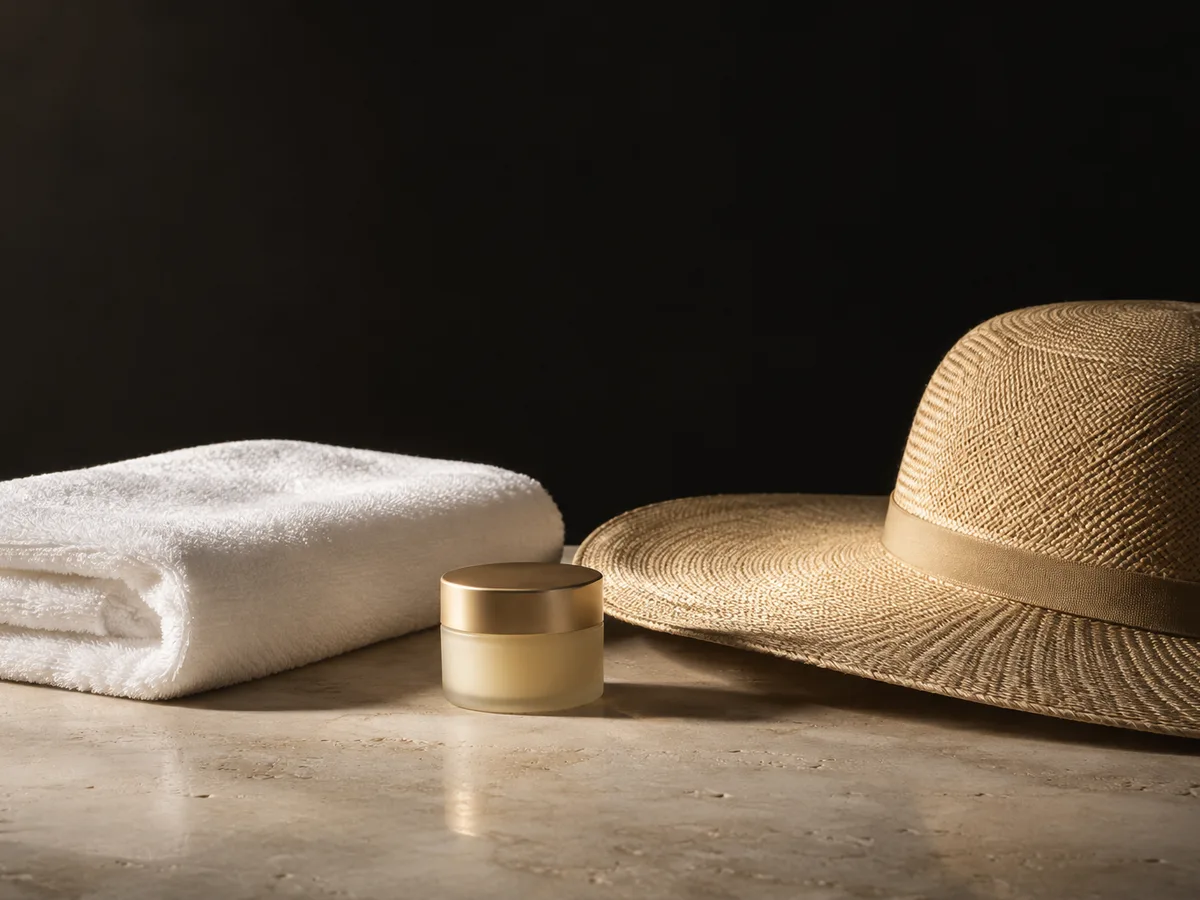
Book the morning, bring a wide-brimmed hat, or ask someone else to drive. The first sun decision is made before you reach home.
Day two
Redness has usually settled to a flush, pink rather than red. The tightness is stronger, and the skin may feel dry or papery, with mild swelling around the eyes on waking.
Do: cleanse gently twice a day. Moisturise with the bland product as often as the skin feels tight.
From this point, most providers permit a mineral sunscreen with zinc oxide or titanium dioxide. It becomes non-negotiable if you go outside, and it gets reapplied.
Do not: use chemical sunscreens, exfoliants, retinoids, vitamin C serums, acids of any kind, or fragranced products. Do not resume makeup unless the provider has cleared a mineral formulation, and do not exercise hard.
Days three and four
The skin is close to its normal colour. Dryness and light flaking are common, and the surface may feel rough to the touch, like fine sandpaper.
This is the epidermis turning over and is normal. Some people notice a temporary crop of small bumps or a breakout, particularly if the skin was prone to it before.
Do: continue the bland routine. Light exercise is usually acceptable from around day three, with a thorough cool rinse afterwards, and mineral makeup is generally fine by now.
Moisturise generously. The flaking is best managed by hydration rather than removal.
Do not: pick, scrub or exfoliate the flaking skin. Do not apply anything to spot-treat a breakout without asking the provider, because most acne actives are irritants on healing skin, and do not swim in the ocean or a pool.
Days five to seven
The skin looks and feels close to normal, and flaking has finished for most people. The texture may already read as slightly smoother, though the meaningful change is weeks away.
Sensitivity to products is reduced but not gone. Do: begin reintroducing the ordinary routine, one product at a time, starting with the mildest.
A gentle vitamin C in the morning is a reasonable first return. Retinoids and acids come back last, usually at the end of the week or the start of the next, and at a lower frequency than before for a few applications.
Do not: rush. A retinoid applied on day five to skin that looks fine but is not yet fully restored produces a stinging, red, peeling week that sets the whole process back.
Do not resume any at-home device, roller or exfoliating tool. The professional session was the needling; the week is the healing.
Sun, sweat and water in Los Angeles
The sun rule is firm for the first week and firm for the following month: a mineral sunscreen every day, reapplied, plus a hat and shade where possible. Freshly needled skin that catches sun can develop pigment that outlasts any benefit.
The marine layer is not protection. A car window is not protection.
The water rule is about infection. Fresh channels close within hours, but the skin barrier is compromised for days, and ocean water, pool water and hot tubs all carry organisms that an intact barrier would shrug off.
The bay water grades published by Heal the Bay make the point without any help from this publication. Wait until the flaking has stopped, which for most people is toward the end of the week.
The sweat rule is about heat and bacteria. Hard exercise in the first two or three days brings blood to the face, prolongs redness and delivers sweat into channels that are still closing.
Walk instead, and walk in shade. The oak paths at Descanso Gardens are gentler than any coastal option, with the standing caveat of a wide hat.
For an evening out that requires no daylight, downtown is the answer. A face that should not see noon can see a stage.
The Music Center downtown is the standing recommendation for the second or third evening. Low light, indoor air and a seat facing away from the windows.
Performers who work on camera should build the redness window into the schedule before committing to a date. Redness at modest depth lasts a day or two and at scar depth longer.
The guild resources published by SAG-AFTRA are of more use for that planning than any clinic's estimate. Book at the start of a gap, not the end.
When to call the provider
Most weeks pass without incident. Some signs should not wait for the next appointment.
Redness that worsens after day two rather than settling, or redness that spreads beyond the treated area. Heat, swelling or tenderness that increases rather than decreases from day two onward.
Pus, yellow crusting, or a spreading rash of small blisters, which may indicate bacterial infection or a cold-sore reactivation. Fever or feeling unwell.
Dark patches developing in the treated area over the following weeks. These may be post-inflammatory hyperpigmentation, and early treatment works best.
A good practice gives you a number that reaches a clinician, not a front desk, and expects you to use it.
If the practice did not, that is a note for next time. It is also a reason to read the provider guide before returning for another session.
Between sessions
Sessions are usually spaced four to six weeks apart. That is the time it takes for the inflammatory response to resolve and for early collagen to be laid down.
Between them, the routine returns to normal with two standing exceptions: daily mineral sunscreen without fail, and a pause on retinoids and acids for a few days before the next session so that the skin is not already irritated when it is needled.
If the provider has asked for a lightening agent as preparation, which is common in deeper skin tones, use it as directed. The skin-tone guide explains why it matters.
In brief
Bland products, cool water, no actives, no sun, no sweat, no swimming, for a week. Reintroduce the routine slowly, retinoids last.
Call if anything gets worse instead of better. The week is dull by design, and the discipline is what turns a red afternoon into smoother skin three months later.