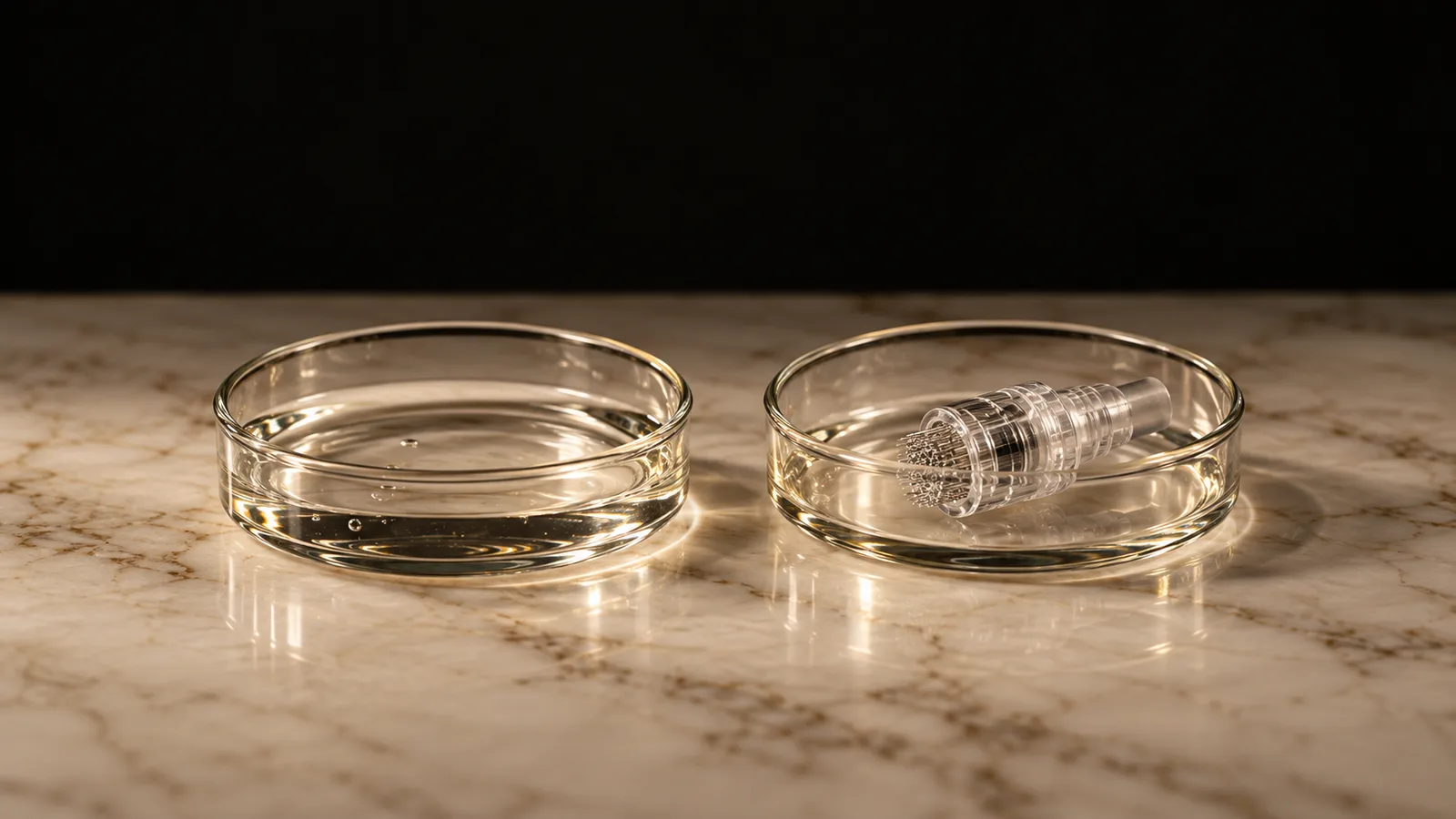
Neither is a first-line treatment. A clinic that offers either as one for melasma without a topical regimen in place is not reading the literature.
Enlarged-looking pores and general texture respond modestly to both. Neither changes pore size, which is fixed; both can make the surrounding skin smoother so that pores read as smaller.
A clinic promising to shrink pores with either has promised something the anatomy does not permit. The promise tells you how the rest of the consultation will go.
Downtime, honestly
A superficial peel: pinkness for hours, light flaking for a few days in some people, none in others. Back to normal that evening, with sunscreen and without makeup until the following morning.
A medium peel: darkening and tightness for two or three days, peeling in sheets for about a week, redness fading over weeks. Five to ten days before most people are comfortable being seen.
Microneedling at a modest depth: redness resembling sunburn for a day, sometimes two, pinpoint bleeding on the day, a tight and dry feel for several days. Presentable with mineral makeup within a day or two for most.
Deeper needling for scars extends this. The aftercare guide walks through the microneedling week day by day.
The comparable week for a medium peel is longer and more visible. No honest practitioner will tell you otherwise.
Skin tone
This axis deserves its own guide, and has one: peels, microneedling and PRP for deeper skin tones. The brief answer follows.
Skin which pigments in response to injury, broadly olive to black, carries more risk of post-inflammatory hyperpigmentation from any resurfacing. The risk rises with the amount of epidermal disruption.
Superficial peels with well-chosen acids are used routinely and safely across all skin tones by practitioners who prepare the skin properly. Medium peels in deeper skin require more caution, longer preparation and lower TCA strengths.
Deep phenol peels are largely avoided. Microneedling, with its intact epidermis, is generally regarded as a lower-pigment-risk option for dermal work in deeper skin, which is one of its strongest arguments in a city with this population.
Sessions, cost structure and maintenance
Both procedures are usually sold in series. Superficial peels are commonly done every few weeks for a course of several, and medium peels are done once, with a repeat months or years later if wanted.
Microneedling is usually three to six sessions, four to six weeks apart, then maintenance. The pricing structure guide explains how quotes are built for needling and its add-ons.
Peel quotes follow a similar logic, priced per session and by depth, with medium peels priced as a single larger procedure. Maintenance differs between the two.
Peel results at the surface fade as the skin turns over and the sun does its work, so superficial series are repeated. Collagen laid down after needling or a medium peel persists longer. It too is subject to age and ultraviolet light.
Nothing in this category is permanent. Any clinic using that word about either procedure has said something it cannot support.
Combining them
Clinics often propose both, sequenced. A superficial peel series to clear surface pigment, then needling for texture, or needling with a light peel some weeks later.
Combination is not wrong. It is more procedures, more cost and more chances for the skin to react.
A reader in the position to spend well rather than often is entitled to ask what the second procedure adds that the first does not. The answer should refer to their skin rather than to the menu.
The local factors
Los Angeles sun is the same problem for both, larger for the peel because more epidermis is missing for longer. Recovery here means shade, a mineral sunscreen and the discipline to reapply it.
Readers spending a recovery weekend with children ask for shaded options. The covered walkways at the Los Angeles Zoo and Botanical Gardens are better than the open enclosures, and the early hours are better than noon.
Canopy is the criterion for any outdoor choice in that week. Open lawns, beaches and rooftop patios all fail it, however pleasant they are in ordinary weeks.
The Los Angeles Parks Foundation, the city's parks charity, keeps a map of shaded green space that beats any aftercare sheet. Use it before choosing a park.
Timing is the other planning question. The third day after a medium peel is the visible one, and the week is easier to carry when nobody needs collecting at three.
Families in Pasadena timing a medium peel around a school break can check the Pasadena Unified term calendar before choosing a week. Map the peeling days onto it first.
Clinic density is a separate matter, and readers weighing clinics along the Hollywood corridor sometimes read it as a signal of quality. It is a signal of rent and foot traffic.
The improvement-district material at The Hollywood Partnership explains why so many opened on the same few blocks. Nothing in it says anything about skill.
How to decide
Ask what the problem is. Surface pigment and dullness point toward a peel, pitted scarring points toward needling, and fine lines point toward whichever downtime you can carry.
Then ask what colour the skin is, and let a deeper skin tone push toward needles or gentler acids. Then ask how many days you can spend looking like something happened to your face. Let the honest answer settle any remaining tie.
Take those three answers into a consultation and put them to a practitioner who offers both procedures. A practice that sells only one will tend to recommend it.
Among Los Angeles clinics whose service lists span skin rejuvenation, My Aesthetic Doctor is one example a reader can check against that standard. Ask whether the recommendation you receive refers to your skin or to the treatment the clinic performs most.
When comparing options, the useful distinction is between a recommendation that could only apply to you and one that could apply to anyone who walked in. The first is worth paying for.